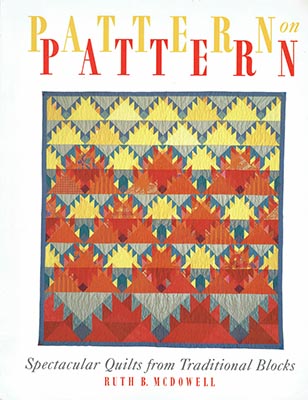
This image was scanned from the Dianna May Martin personal library collection
TABLE OF CONTENTS
- Introduction
- PART 1: GENERAL INSTRUCTIONS
- Design Considerations-
Reverberant Patterns
Transparency - Fabrics-
Fabric Selection
Solids vs Prints
Calicoes
Visual Texture, Tactile Texture and Reflectivity
Iridescent Fabrics and Chambrays
Wrong Sides
Furnishing Fabrics
Fabric Preparation
Quilting as a Salvage Art
Fabric Collection
To Dye or Not to Dye - Preplanning
- Technical Considerations-
Templates
Graph-paper Templates
Piecing
Sewing Machines
Angled Seams
Pressing
Borders
Planning a Special Border
Measuring for Borders
Butted vs Mitered Corners
Basting
Quilting
Hand Quilting
Machine Quilting
Tying
Quilt-as-you-go
Machine Quilting with the Regular Presser Foot
Machine Quilting with an Even-feed Foot
Free-motion Quilting
Designing New Quilting Patterns
Quilting an Angled Grid
Experimenting with Quilting Patterns on Tracing Paper
Marking Quilting Lines
Design Wall
Bindings
Smoothing Out the Waves
Folding Quilts
- Design Considerations-
- PART 2: THE QUILTS
- How To Use This Section
- Maple Leaf
- Mill Wheel
- Birds in the Air
- Fire on the Mountain
- Four Patch Variation
- Merry-go-round
- Clay's Choice
- Corn and Beans
- Jacob's Ladder
- Picnic in the Cherry Orchard
- Roman Square and Roman Square Pinwheels
- King's Crown
- Prairie Queen
- Snowflake
- Two Triangles
- Shoo Fly
- Windblown Square
- Monkey Wrench
- Double T
- Conclusion