
1991 Soft Cover Edition(17th printing, abridged)This image was scanned from my private collection
TABLE OF CONTENTS
- Preface
- Explanatory Symbols
- The Origins of Origami:
- What is Origami?
- Kan-no-Mado
- Sembazuru Orikata
- The Origami Tradition:
- Outstanding Origami
- The Most Plastically Representative Work- The Frog
- The Most Elaborate Fold- The Crab
- Origami and Japanese Paper
- Folds and Constructions- Geometric Folding Lines:
- Square Paper
- Triangular Paper
- Rhombic Paper
- Regular Pentagonal Paper
- Regular Hexagonal Paper
- Regular Octagonal Paper
- Origami Fundamental Forms
- Compound Origami Fundamental Forms:
- Compound Origami from Square Paper
- Compound Origami from Right Triangular Paper
- Compound Origami from Rhombic Paper
- Square Paper Diagonal Fold:
- Sailboat I
- Butterfly
- Dove I
- Carrier Pigeon
- Cup
- Basket
- Hat
- Work Cap
- Bird-face Cap
- Japanese Helmet
- Rabbit Hat
- Badger Hat
- Sea Gull Base:
- Sea Gull I
- Mandarin Duck
- Cormorant
- Shrimp
- Swan
- Seal Base:
- Seal I
- Penguin I
- Penguin II
- Octagonal Ornament
- Flower Model
- Book Fold:
- Boat
- Fishing Boat
- Motorboat
- Fox Mask
- Sailboat II
- Double Boat
- Changeable Picture
- Photograph Frame I
- Photograph Frame II
- Pencil Box
- House
- Overseas Cap
- Winnowing Box
- Box
- Snail
- All-corner Fold:
- Lotus Blossom
- Pinwheel
- Yakkosan(manservant)
- Picture Forms
- Flower-shaped Candy Cup
- Sambo(Japanese Offering Stand)
- Sambo on Legs
- Cake Dish
- Crane Base:
- Crane Base I
- Crane Base II
- Crane
- Star-shaped Box
- Morning Glory
- Cake Box
- Hibachi(Japanese Charcoal Brazier)
- Christmas Tree Ornament
- Kago(Japanese Sedan Chair)
- Dragonfly
- Stork
- White Heron
- Nesting Crane
- Hen
- Horned Owl
- Crow
- Japanese Nightingale
- Canary
- Sparrow
- Standing Crane
- Dove II
- Goldfish
- Fish
- Pheasant
- Peacock
- Turkey
- Balloon
- Frog
- Phantom
- Lily
- Rectangular Paper:
- Paper Cracker
- Paper Hat
- Wastepaper Basket
- Folding Box I
- Folding Box II
- Kimono
- Jacket
- Compound Figures (Square Paper):
- Rooster
- Horse
- Deer
- Reindeer
- Rabbit
- Pegasus, the Flying Horse
- Pointer
- Cat
- Monkey
- Dachshund
- Fox
- Seated Fox
- Badger
- Kangaroo
- Camel
- Goat
- Kid
- Lion
- Tiger
- Squirrel
- Spitz
- Seal II
- Bear
- Fisherman Bear
- Wolf
- Elephant
- Polar Bear
- Rhinoceros
- Pig
- Cow
- Water Buffalo
- Wallet
- Thread Container
- Cubical Box
- Six-sided Box
- Hanging Ornament
- Mystery Box
- Hot Plate Holder
- Woven Mat
- Right Triangular Paper:
- Sea Gull II
- Grasshopper
- Triangular Paper:
- Wild Goose
- Wild Duck
- Iris Blossom I
- Iris Blossom II
- Swallow
- Crayfish
- Duck
- Goose
- INDEX OF FOLDS
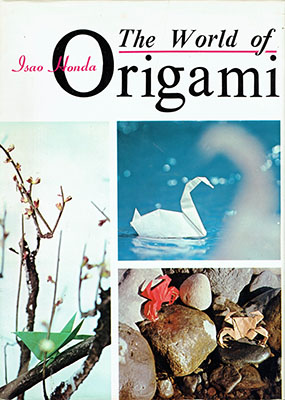
1968 Hard Cover Edition(8th printing(1972), unabridged)This image is from my personal library
TABLE OF CONTENTS cont.
(they simply ommitted the last 82 pages below)
- Compound Figures(Equilateral Triangular Paper):
- Eagle
- Dragon
- Rhombic Paper:
- Macaw
- Bat
- Quacking Duck
- Demon Mask
- Compound Figures(Rhombic Paper):
- Giraffe
- See-no-evil, Hear-no-evil, Speak-no-evil
- Alligator
- Rhombus Constructions
- Other Polygonal Paper:
- Chinese Bellflower
- Azalea Blossom
- Six-sided Ornament
- Turtle Base
- Turtle
- Dragonfly II
- Octagonal Ornament II
- Specially Shaped Paper:
- Double Crane
- Crab I
- Crab II
- Dragonfly III
- Gibbon
- Octopus
- Costume Folds:
- Girls' Festival Dolls(Dairibina)
- Dancer(Banzai-raku)
- Old Man and Old Woman
- The Ideal Modern Origami:
- Compound Origami With a Modern Touch
- Origami Dimensional Forms
- Size and Thickness of Origami Paper
- The Yeas and Nays About Using Scissors
- Independent Creativity
- Bibliographic Note
- Index of Folds