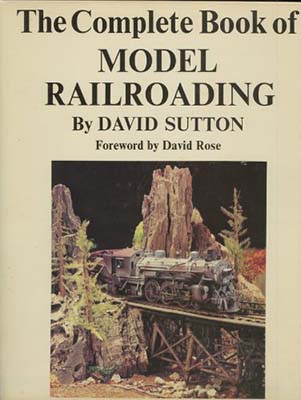
This image property of Publisher,
scanned from my private collection
TABLE OF CONTENTS
- Foreword
- Introduction: The Birth of a Hobby
The growth of the railroads as a means of transportation was followed closely by the birth and growth of the hobby of building miniature models. The building of miniatures became more refined and more prototype. HO emerged as the standard gauge. - I. Getting Started:
Discussion of gauge and prototype operation. Activities and periodicals related to model railroading. The history and function of the National Model Railroading Association - II. Selecting Motive Power:
Types of locomotive switching. Freight, and Passenger, Subtypes. Whyte Locomotive Classification System. Turnouts and switches. Era. Ready-to-run. Couplers. "Custom built." Detailing. Authenticity. - III. Primer for Kit Assemblers:
Types of kits: "scratch" building; "screw driver assemblies"; "quickie kits." Working area. Instructions. "Flash." Testing. Lubrication. Break-in couplers. Selection of kit. - IV. Superdetailing and Conversions:
Where to begin. Comparing model with prototype. Methods of applying detailing. Simple ways of dressing up a locomotive. Conversions. The tender. - V. Meanwhile, Back at the Roundhouse:
Care and maintenance: Cleaning, Mechanical, Electrical, and Lubrication. Tools, Methods for cleaning. What to check mechanically and electrically. NMRA gauge. - VI. Painting and Special Effects:
Airbrushing. Techniques for airbrushing. Colors. Special effects. Conforming to prototypes. Kadee Magna-Matic Delayed Action Couplers. Reducing distance between locomotive and tender. HO scale figures. Blind drivers. Road names, engine numbers, heralds, and slogans. - VII. Layout Design and Track Plans:
Space. Type of Construction: Table of Flat Top and Open Bench or Grid Work. Era-Locale-Motive Power. Track plans. - VIII. Track Tips:
Ready-to-lay track. Snap-track. Tru-track. Ready-track. Roadbed. Tie and Track laying. Rail Stock. Track Gauge. - IX. Along the Maintenance Way:
Maintenance check list. Methods for track cleaning. Gauge. Checking terminal connections. Proper clearance. Turnouts. - X. Mountains out of Molehills:
Scenery and landscaping. Texture paint. Scenic aids. Sources for scenic ideas. - XI. Extra Special Effects:
Aging and weathering. Revamping and modifying structures. Tonal effects. Illumination. Rip track. Use of photographs to check authenticity. - XII. Rolling Stock...From A to Z:
Types of rolling stock - kit and ready-to-run. Couplers. Wheels. Plastics. Weighting. The caboose. - XIII. The Forward Look-Diesels:
History and development of the diesel. Types of diesels. - XIV. Horse Cars to Interurbans:
Traction. Electric streetcars. Types of interurbans. Interurban layout and effects. - XV. Civil War - Old Timers - Historic Locomotives:
"999." Prototypes. Operation. Famous locomotives - the General and the Texas. Special effects. - XVI. Supplying the Power - An Introduction to Wiring:
Basic information and terms. Power packs. Gaps and breaks. Methods of wiring. Turnouts. Track plans. Operation. Feeders. Realistic operation. - XVII. ASTRAC - A New Concept for Radio Frequency Control:
Characteristics. Carrier Control. Contol Units. Conversion to ASTRAC. Power routing turnouts. Selecting a locomotive for ASTRAC operation. Power supply. Speed control. Inertia control. Costs. - XVIII. Realistic Operation:
Protoype and Scale. Speed. Start-Run-Stop-Cycle. Transistor Throttle. Accessories. Maintenance. Multi-train operation. Operation accessories. Model Railroad Clubs. Things to come. - Bibliography
- Glossary of Railroad Modeling Terms
- INDEX
- *
by *